April 20, 2008

BoingBoing

For those of you living under a rock, BoingBoing.net is a compendium of neat links, videos, pictures and news stories. It's won numerous web awards (for the Weblog Awards, they are disqualified from some categories for winning so many times). It is updated by Mark Frauenfelder, Cory Doctorow, Xeni Jardin and David Pescovitz.

I used to read it religiously, every day, sometimes even multiple times a day. Here are some things that bugged me so much I just couldn't read it anymore.

  • Steampunk - Holy god in heaven is steampunk the dumbest crap ever. Cory Doctorow has the weirdest, creepiest love affair with steampunk and can't refrain from posting about ANYTHING steampunk, even a fucking coffee mug. Whenever I think steampunk, I think it's just all those nerds who liked Wild Wild West and have a fetish for making everything twice as complex as it was before.
  • Xeni Jardin = Sex - If there's a post about sex, it's Xeni's. She is the classic internet attention whore- constantly tries to prove how smart she is, how nerdy she is, how she's soooooo open-minded her brains leaked out, that she's sexually liberated by constantly drawing attention to the fact she has boobs. It's women like this that make it frustrating for me to post on forums and message boards.
  • Transportation Security Administration - This issue was what pushed it over the edge. BoingBoing has harped about the TSA for ages, as if it's the most evil, corrupt entity in existence, that they stomp on rights, are overbearing, etc. etc. as if flying is some inalienable right listed in the Constitution. That's what happens when nerds with too much free time and liberty have to find something to feel prosecuted about. Here's an example of the extensiveness of their bitching about the TSA:
One day, Xeni posted an account of where she and other passengers of her flight were harassed by the TSA for no apparent reason. She says:
After 30 minutes, the TSA people said, okay, you may leave now. And everyone unfroze, and went and got their bags. No explanation. I guess I should have pressed for an explanation, or demanded to know why we were being held without our consent and without a provided reason, but I was really tired and just wanted to get the hell out of there and go home. Perhaps I was wrong to have just walked away.
She GUESSES she should have pressed for an explanation? After all the whining and complaining and Nazi comparisons?! I left a comment that told her she should be ashamed of herself, but since their comments are moderated, it never showed up. Funny.

Here's a great example of most of my BoingBoing pet peeves being put into action:

Sex, Xeni, and the TSA


Discovery Channel- I Love the World


I saw this while watching Mythbusters. It's very touching, sweet, and lighthearted. Kudos to the Discovery Channel for making it (although they tried to fit in as many of their shows as possible). Watch for the Stephen Hawking cameo.

April 6, 2008

Nutrisystem Nuttiness


For people who want convenience because they're too lazy to cook, that sure seems like a deal-breaker to me.

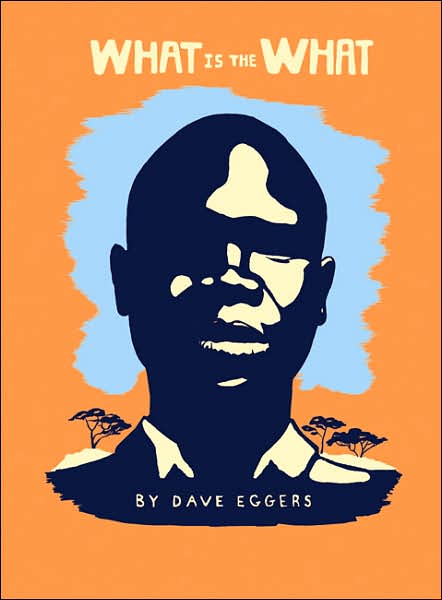
Book Review: What is the What


What is the What by Dave Eggers

Acquiring this book was unusual for me in two ways: I almost never, ever buy new books, much less ones I haven't read (my rule is usually to buy a used copy after I've read it a few times); and to buy a book from an author I've never read. I had heard plenty about Dave Eggers, both online and from a few friends whose opinion I trust, but I hadn't so much as read a paragraph of his.

The title is a little awkward, but it makes sense once you read the book. The book is an account of the life of Valentino Achak Deng, a Sudanese man who is forced to run away from his village at the age of six due to raids by Arabs. He journeys around Sudan, joining other groups of boys, ending up at one refugee camp after another until one day he is selected to go to America.

It is not a fiction book, nor is it a biography. In the introduction, Valentino explains that he didn't think he could write the story himself, and the work is classified as fiction because of course he cannot accurately recall small events or conversations from when he was young. Many reviewers on Amazon had a problem with this, saying that Valentino should have written the book himself, that Eggers (or anyone, for that matter) can't tell someone else's story. A few were confused about the whole 'classifying it as fiction' thing. Once you start to read the story, though, it is very easy to just read his account of his life.

The way the book was written made my opinion of Eggers very favorable. It is chronicled in one day of Valentino's life here in America, with the rest of the story told in flashbacks. This is extremely hard to do without losing the reader, and he does it wonderfully. There is a nice balance of explaining the situation in Sudan (which I was woefully undereducated about), having the 'gory details', and injecting raw humanism (to use a very navel-gazing phrase). Valentino isn't made out to be some sort of tragic little hero, struggling through oppression and death with a brave heart. He is just very human, scared and defeated at times, and joyfully optimistic at others.

The few problems I have are not such big deals. Having written for so long, it is very rare for a book to suck me in enough to where I just read, instead of analyze their writing style, tricks, methods, etc. About three-quarters of the way in, the length and layout of the flashbacks, especially the way he wraps them up, became very predictable. Also, I would've liked to see a little more of his experiences with America. There is an adequate amount of anecdotes regarding this, such as when he and his roommate at first don't know what food goes in the fridge, the freezer, or the pantry, but being the egocentric American, more details of culture shock would've been a nice insight.

The book was not trite, nor did it play up to your emotions by being overly despondent or overly optimistic. It's definitely worth a read, especially if, like me, you know little or nothing about what is going on in Sudan. All in all, it was a beautiful book that makes you sit back and appreciate everything you have, especially love and life itself.

March 26, 2008

Cheap Chicken Soup


Ingredients:

2 Chicken drumsticks
1 cube chicken bouillon
2 Stems Bok Choy (substitute: Spinach, Peas, or Broccoli)
2 squares sizzling rice
Few dashes pepper
Two dashes ginger

Set a medium pot of water to boil on the stove. Remove skin from chicken. Slice off as much meat as you can, taking care to remove any gristle and cartilage. Cube the meat and add to the pot when the water is at a rolling boil.

While this is going on, wash your bok choy and cut off stems to just below where leafy part starts. Cube this.

Chicken should be almost done at this point (it takes about 15 minutes total), so drain some of the water from the pot. Keep only as much as you think you'll consume. Add a cube of bouillon and the pepper and ginger.

When the chicken is done (take out a piece and cut it open- if it's all white, you're good to go), add the bok choy and immediately turn off the heat.

Set sizzling rice at the bottom of a bowl and pour the soup over it.


Comments:

One of the best cooking advice I've gotten is if the chicken looks done, it is done. That way you won't overcook it and end up rubbery.

I used sizzling rice because you don't have to precook it. It's a great timesaver. You can also sub in regular egg noodles, elbow macaroni, whatever kind of pasta into this. Just add it in when the chicken is about halfway done.


Analysis:

310 calories

$1.13 per serving

March 24, 2008

Eat This, Not That

The Men's Health website has a great section called Eat This, Not That. It's very heavy on promoting the book of that name, but has some good information and is worth a look around.

It contains better choices and options at fast food/sit-down restaurants and grocery stores. What really caught my attention was the fact it's not cutesy and improbable suggestions like "order a salad instead of a burger!" but realistic swaps.

For example, the Krispy Kreme Original Glazed Doughnut has 200 calories versus Dunkin' Donuts Glazed Cake Donut at 330.

The section is expansive, so clicking one of the four tabs at the top (Restaurants, Groceries, etc.) leads you to at least 4 or 5 tabs.

Here's the link.

March 5, 2008

Automobile Advice from the Inside

I have been working at a car dealership for almost a year now. Whenever I tell people this, they always ask, "do you sell cars?", as if there is nothing else involved in running a dealership. A friend of mine told me he got a similar response when he told people he worked at a pizza place (no, he didn't deliver).

Being exposed to the inner workings, I feel I can share some things I've learned.

  1. The markup on new cars is slim. I don't work at a luxury dealership so I can't speak for BMW or Mercedes, but our markup, the difference between MSRP (or 'sticker') and what we pay for the car is usually less than $500. In fact, we lose money on about 20% of the new car deals. However, the higher you go in price, the higher the markup. For example, our econogas cheapo model is marked up about $375, and our luxury SUV is marked up around $1000.

  2. We make most of our money on used cars. Take, for instance, my old 1997 Nissan Altima. If I'd have traded it in at the dealership, I would have been given $800-$1000, depending on the condition. They will then turn around and sell it for $2900-$3100. It's a pretty good rule of thumb to assume that there is at least a $1000 markup on a used car, if not more.

  3. Assumptions are made about you. Before you open your mouth, the salesman can predict if you're buying new or used, if you're an actual buyer, and if they're good, what model car. I'm not saying this is negative or positive, it just happens and you'd be surprised at how often they are right. A young white girl will almost always want the sport coupe but she is 'just looking', as she has to have her dad/mom with her to actually buy the car (she usually doesn't come back). A middle-aged lady in sweatpants and a loony-tunes t-shirt wants a used car, probably a sedan, and will come back at least 3 times before she buys. And contrary to popular belief, a salesman's favorite customer is Mexican. 9 times out of 10 when they say they will buy, they come back and then later send in referrals. They are pleasant, not demanding, and realistic about what they can get with whatever budget they have. As much as it seems these are stereotypes, they often turn out to be true.

  4. There is no such thing as a $3,000 car, '00 or newer with less than 90,000 miles. Get over it. We always say to call when they find this imaginary car, because we'd sure love to buy one as well. Do some research online, look in the paper or in AutoTrader for prices, and get a feel of what your budget can get. We get at least a customer a day who walks in and wants a $3000 car, only to walk right back out the door when shown a 1999 Grand Marquis with 120,000 miles.

  5. If you feel like you're being hassled and pushed into a deal or the salesman is rude or overbearing, leave immediately. These are indicators that a dealership doesn't treat its employees well or certainly doesn't treat their customers well. Most people are afraid of the car-buying experience (women in particular) for this reason. A dealership that is disrespectful of you will not be honest and will more than likely take advantage of you. Finding a salesman you trust is as important as finding a good hairstylist or accountant. A good salesman will help you even after you've closed the car deal and will remember you the next time you buy a car (and probably discount the price). Always keep in mind that the dealership is serving you, and you do not have to buy a car. Up until the point you sign a contract, if you feel uncomfortable, you can just walk away. Which also brings me to my next point:

  6. Don't waste the salesman's time. If you are not really considering the car, or have a good feeling you won't buy anytime soon, say so. Be upfront and honest with the salesman and he will be upfront and honest with you. We don't mind letting people drive the cars (after all, they could fall in love with it) when they say they may not buy, but we do mind people who come back two or three times or stay for two hours without being clear on what they want. It's not fair to the salesman and just plain inconsiderate. Never, ever try to bluff your way into a better deal by saying such-and-such dealership offered you X price (unless, of course, they have, then by all means use that to your advantage). It will be obvious if you're lying.

  7. Shop at the end of the month. Salesmen get bonuses depending on how many cars they sold in a month. If they've had a bad month, they will be much more likely to do anything to get you to buy the car, including throwing in a tank of gas or window tint. The slowest months are November-February, with January probably being the slowest month for car dealerships.

  8. Rebates. If there's a car you want to buy, keep an eye out for commercials and check the company's website for rebates. These actually work in your favor. Rebates are taken from the company's profit margin, not the dealerships'. If a dealership tries to explain that they can't go down on the price because of a rebate, call them on it.

  9. If you have bad credit and know you have bad credit, be flexible. This is so, so important. A good thing to do is to bring pay stubs or your W2- a lot of lenders will require proof of income (or POI). Don't expect to get your dream car for your dream payment. Dealerships are willing to work with you to make you happy, but if you aren't in the place to make demands, don't. Just the other day, two women were in, trying to buy a new car. One of their credit scores was around 500. Our finance manager was trying to pull favors from the bank to help them out, but they refused to either drop down a model or even to the 4-cylinder from the V6. Trust me- if you're an older lady, two cylinders is not going to make a difference. Unless you drag race your fellow ladies from church.

  10. Ask for their best price, then say you'll sleep on it. Most of the time, when customers leave, they don't come back and dealerships know this. Do not leave, but act reluctant or say you'll go home and sleep on it and watch the salesman shit his pants. They want to close the deal more than you do, and if they really can't go down in price, they'll throw in a tank of gas, scotchguard (which costs the dealership practically nothing), maybe even window tint if you're good.

In all, try to keep in mind that the car business has changed. There isn't as much trickery and secrecy as there used to be, and the days of hard bargaining are pretty much over. If you have any questions, leave them in the comment box and I'll update this post.